 CYCLIX
Day three
Dresden to Chemnitz: Rain, Then the Steile Wand
Day three was supposed to be the gentle one. 175 km and about 1,300 m of climbing, the flattest profile of the weekend, a roll west out of Dresden through Tharandt, over the hills past Freiberg to Mittweida, then down through Penig and Waldenburg to Meerane and back east into Chemnitz.
On paper, the easy day. In practice it rained.
Leaving Dresden
Everybody was frozen on the start line, and it was not really the cold. It was the rain. Heavy to start with, easing to a steady drizzle around the time we rolled out at ten past eight, and never actually stopping. Water spraying up off every wheel. Hands already numb before the first pedal stroke. Two hundred people getting into rain gear in a square and looking thoroughly miserable about it.
Wind and rain together is a nasty combination. If it were only rain, fine: you get wet, you stay wet, you get on with it, although in honesty I do not like the rain and never have. If it were only wind, also fine: head down and push, or sit behind somebody and get on with your life. Together they are something else. The rain soaks you through and the wind finds every wet patch and sits on it. You stop generating heat because you are not going anywhere, and you are not going anywhere because of the wind. Your hands stop working. You cannot feel the brake levers, you cannot change gear, and you cannot see much either, because the spray off the wheel in front goes straight into your face.
The worst part is there is nothing to fight. A climb you can fight, and a climb ends. The wind just keeps going all day.
The first thirty kilometres climb 250 m through the Tharandt forest, and the day’s highest power number, 745 watts, came somewhere on that at just after nine in the morning. Not heroism. Just a gap that needed closing on a wet road.
Freiberg
We passed through Freiberg, which is a silver town. They have been digging under these hills since the twelfth century, and the mining academy in the town, founded in 1765, is the oldest institution of its kind anywhere in the world. Alexander von Humboldt studied there. It is hard to tell any of that from a bike in the rain, but that is what is underneath.
Mittweida
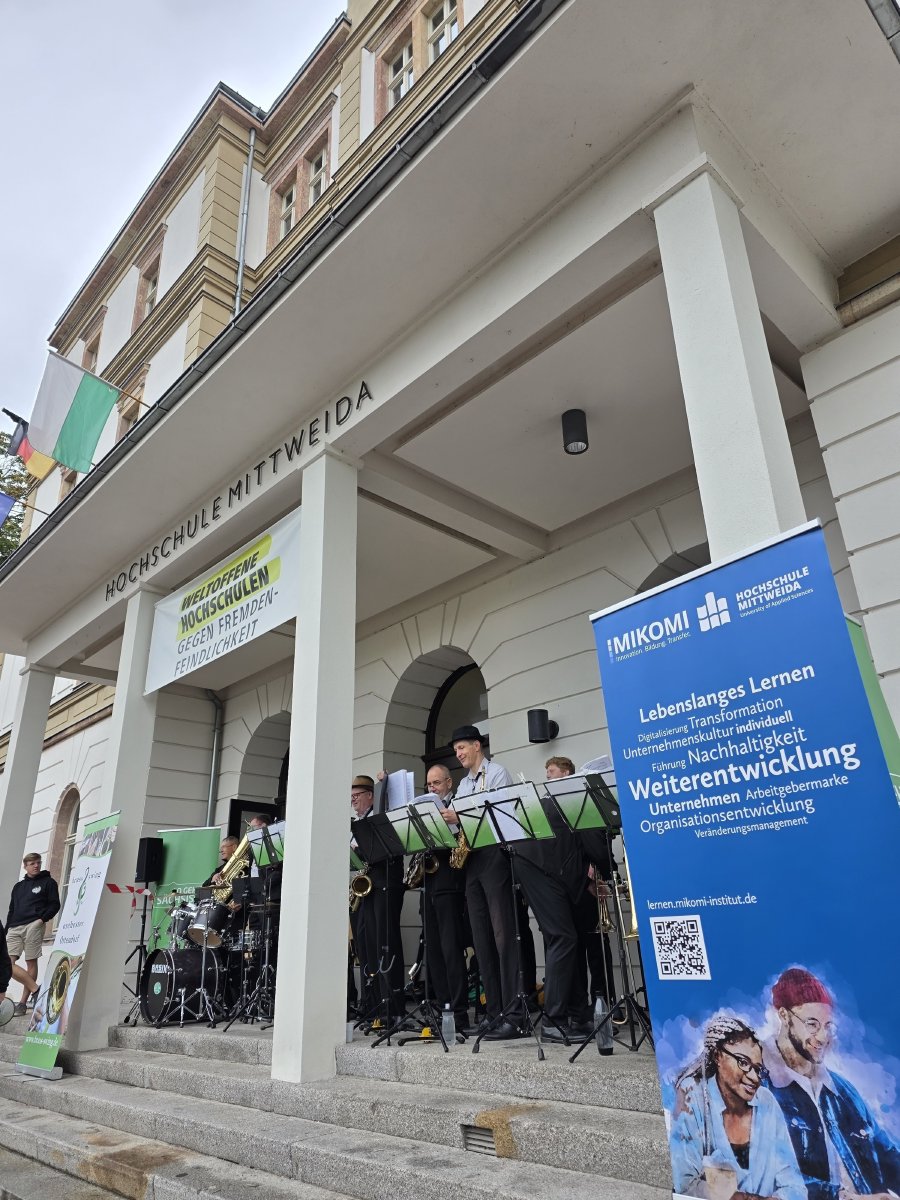
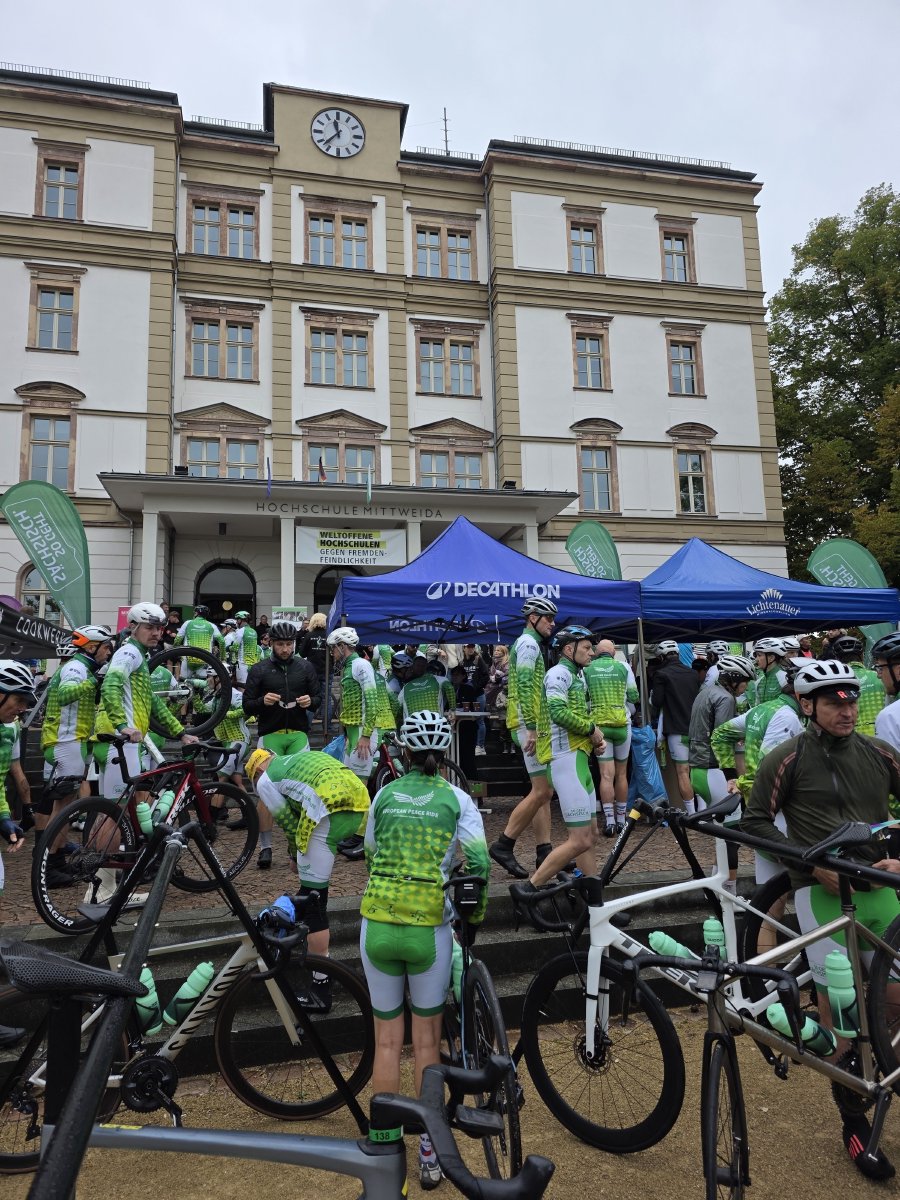
The stop at Mittweida came at km 73, just after eleven. The rain had eased but not finished, just enough to keep everything wet, and nobody bothered taking a jacket off. We stood in the grounds of the technical college with a brass band playing on the steps of the main building and hot drinks going round under Decathlon gazebos. Half an hour there, and it was the first time all day anybody looked comfortable.
The Steile Wand
Meerane is where the Steile Wand is. It is short, it is brutal, and for fifty years it was the most famous climb of the old Peace Race. This is the one place on the route where you are riding something legendary.
The town puts it at 248 m of cobbles averaging around 12 per cent, and the gradient is nowhere near even. Coming off the fast approach the road tips up at 11 per cent, hits 19 in the middle, backs off, then goes again at 14. My own trace runs a little longer, about 290 m, because it starts where I began climbing rather than where the cobbles do: 33 m of gain, speed falling from 17 km/h to 6.6, heart rate at 167, the whole thing over in a minute and fifty seconds.
There were people on both sides of the road the entire way up, cheering every single rider through. That is the part I will remember rather than the gradient.
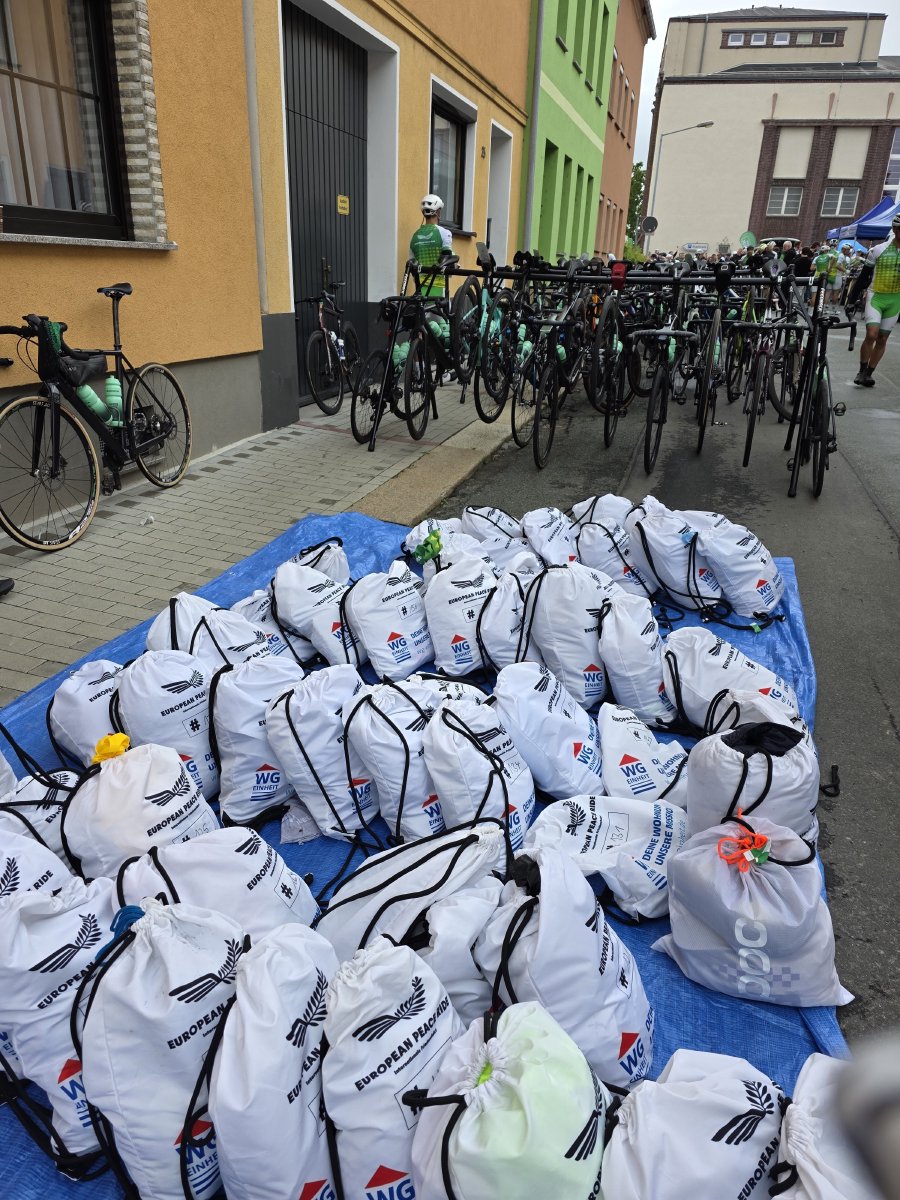
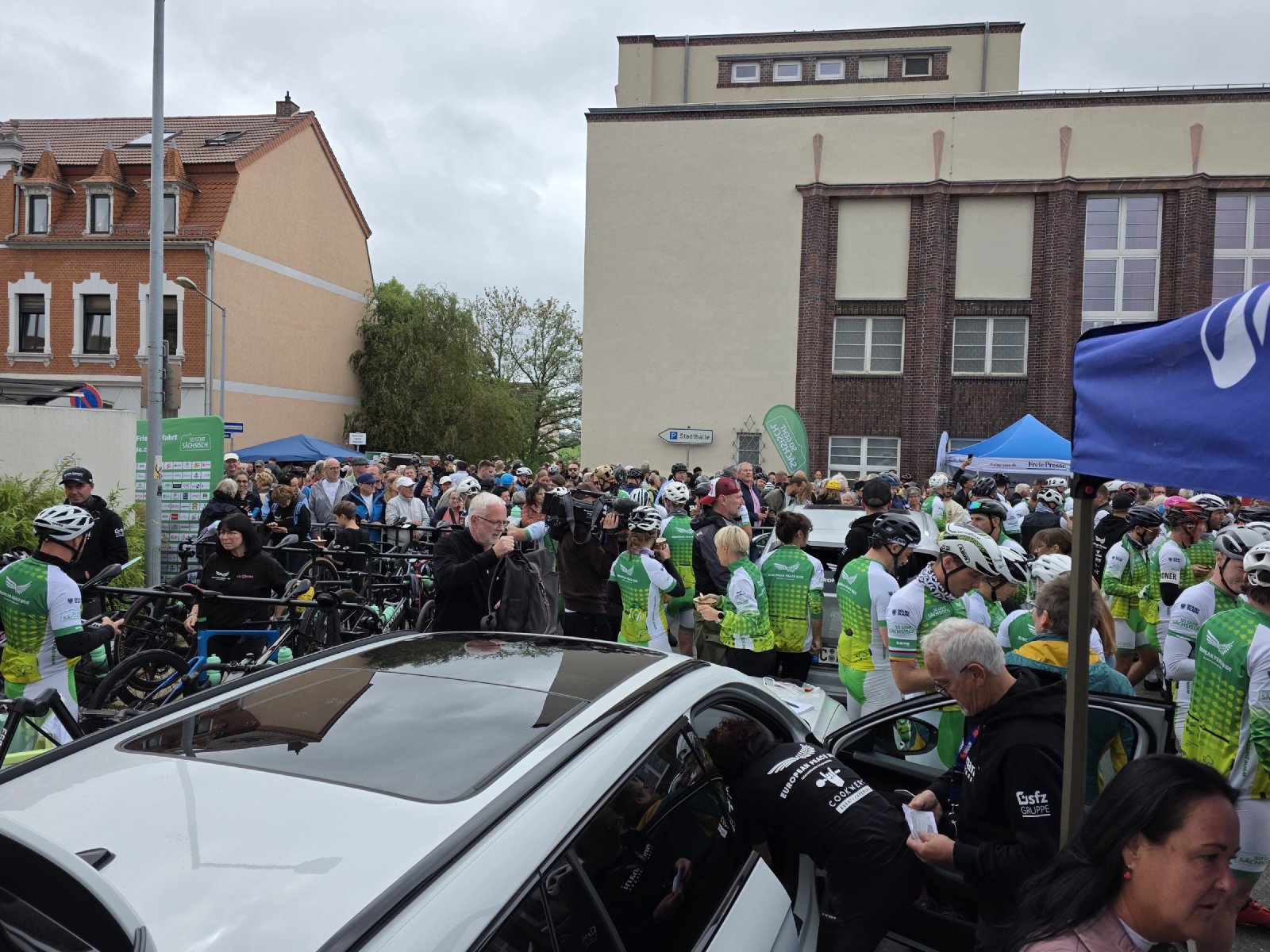
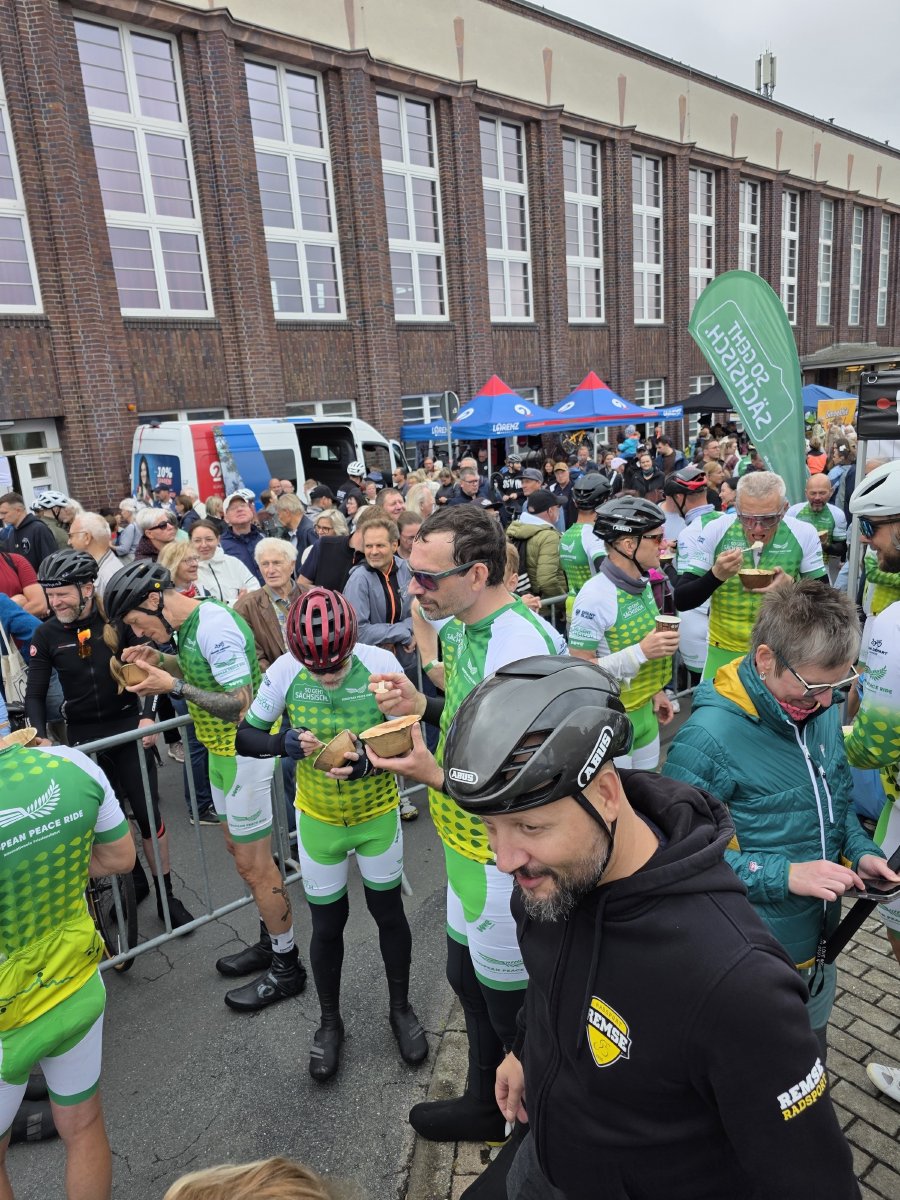
Meerane fed us for half an hour afterwards: crowds behind the barriers, trays of food coming over the top, goodie bags laid out on a tarpaulin, the whole town apparently out in the street. And by the time we got there, the rain had finally eased off.
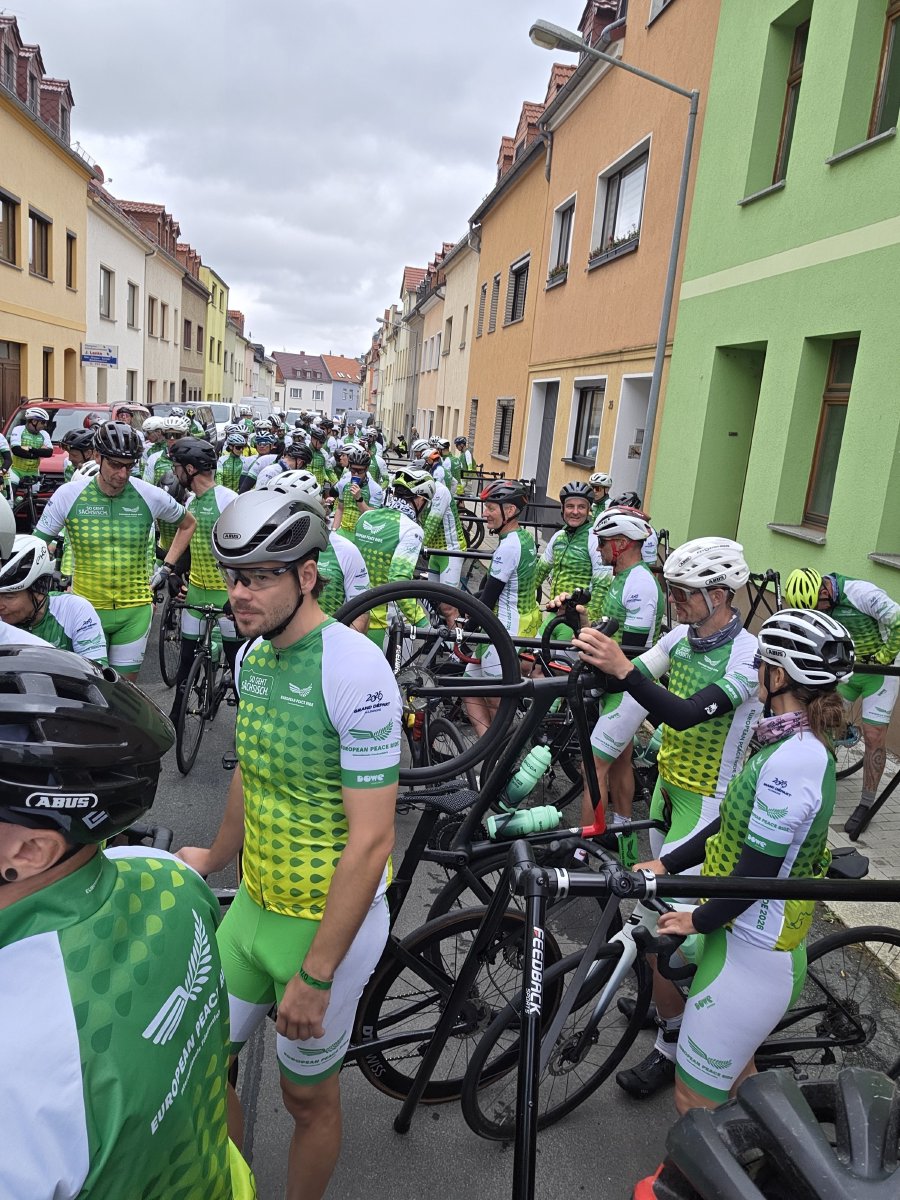
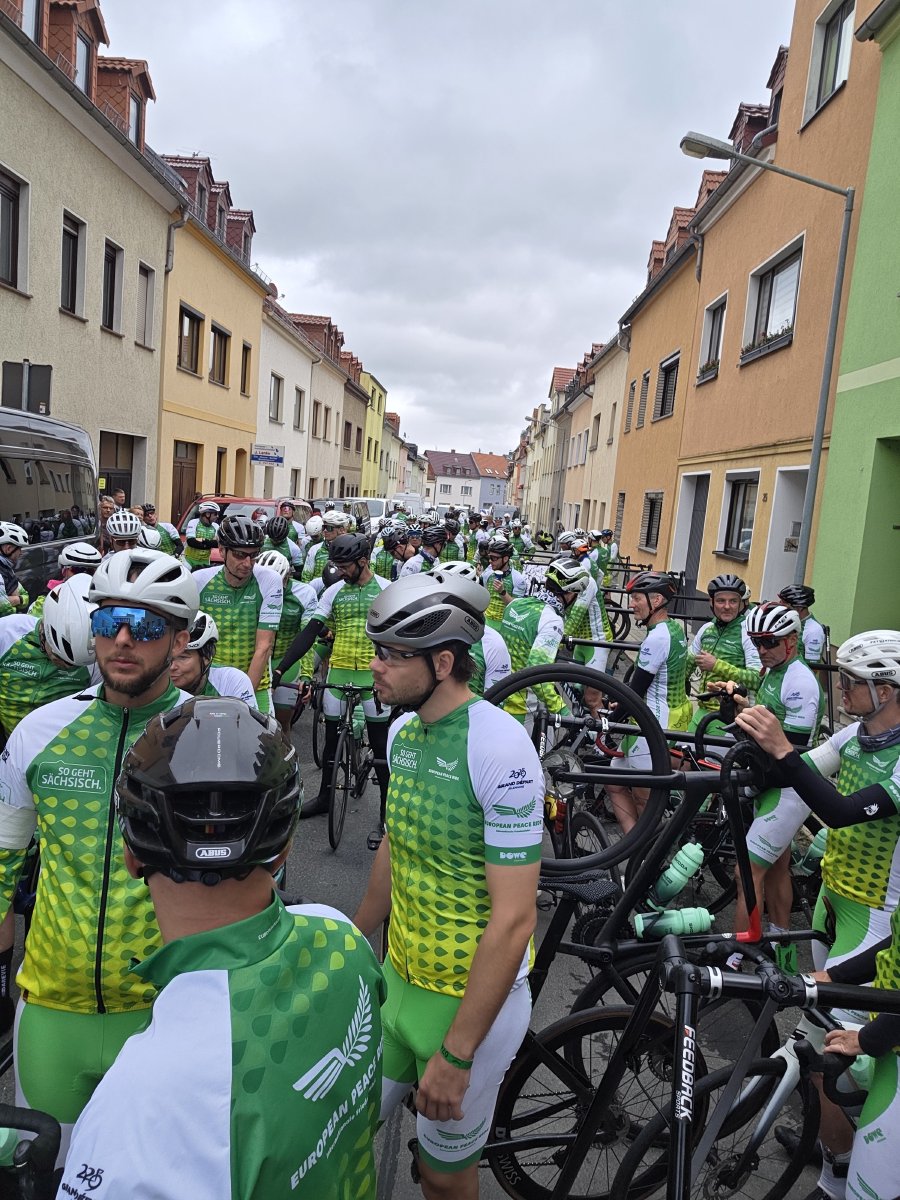
Chemnitz
From Meerane we turned back east through Glauchau, with one short stop at St. Egidien, and ran the last 25 km into Chemnitz under a sky that was finally starting to break up. Clear patches. Nobody said much about it, but everyone noticed.
The finish was at the ice sports park north of the city, and it was packed. Both groups came in together, which is the way it was always going to end. Five hundred kilometres on the schedule, 454 on my computer, three countries, three days. Nobody won, because there was nothing to win.
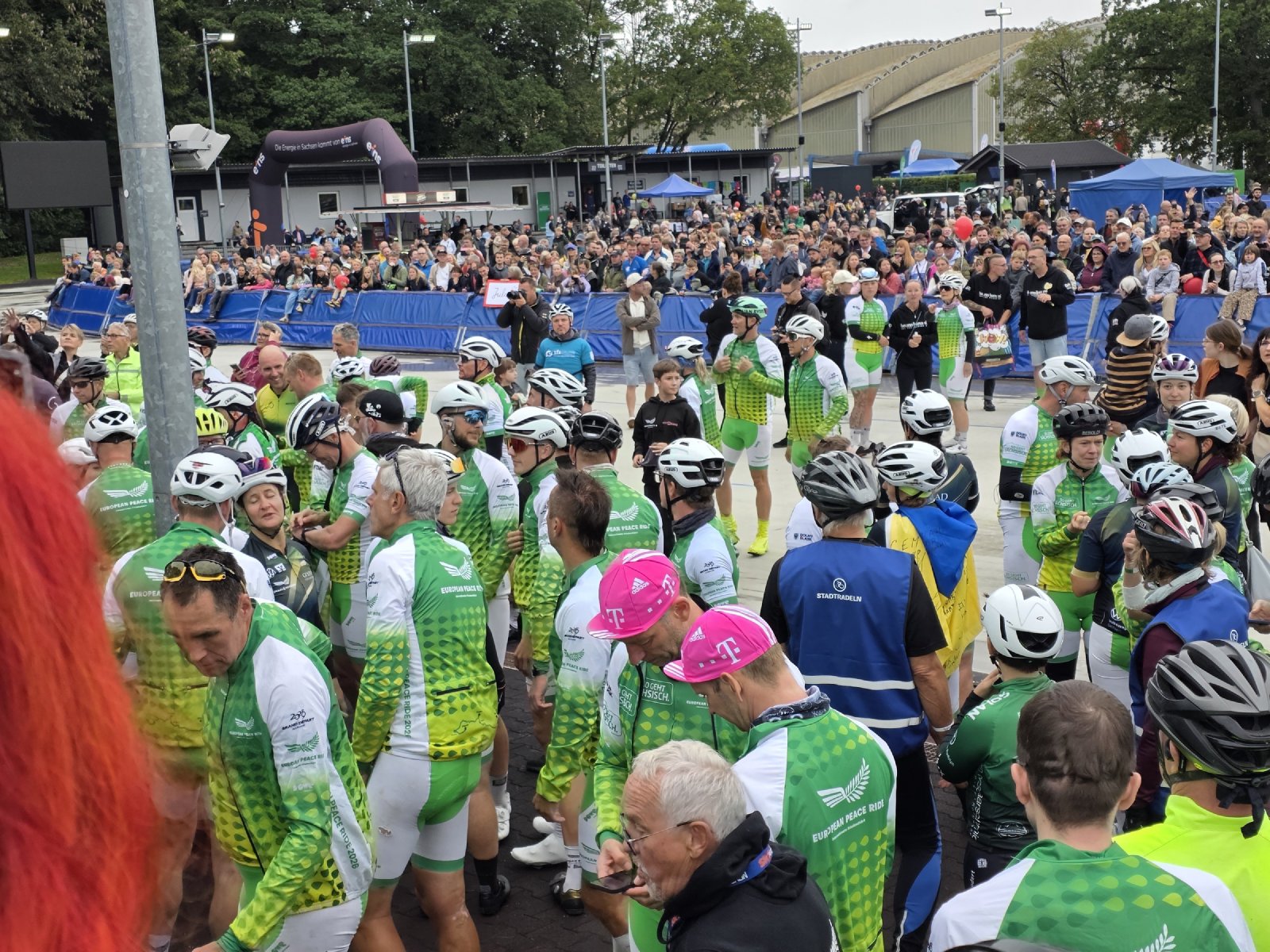
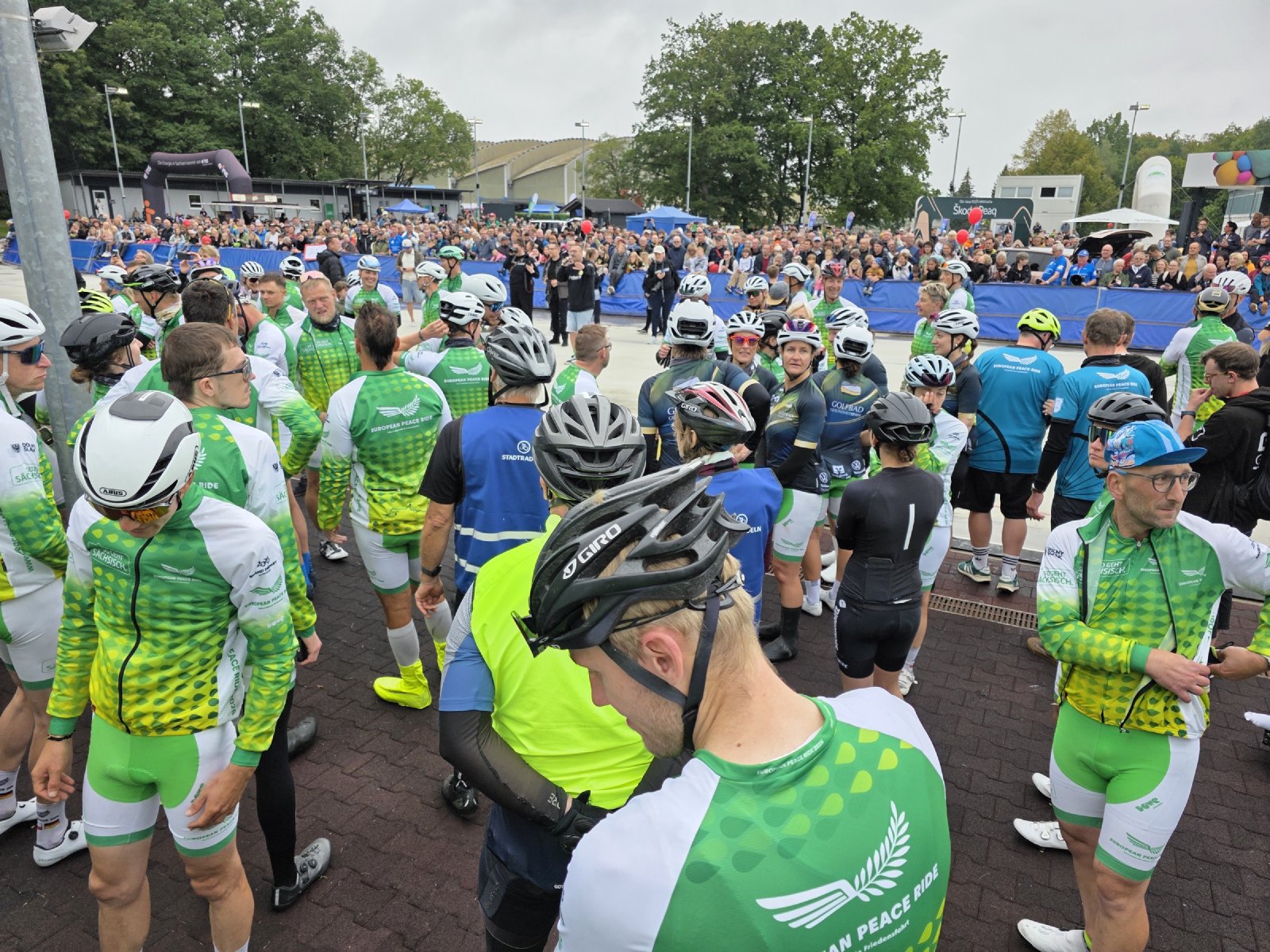
Everyone was tired, everyone was wet, and everyone was still there. That was the entire point.
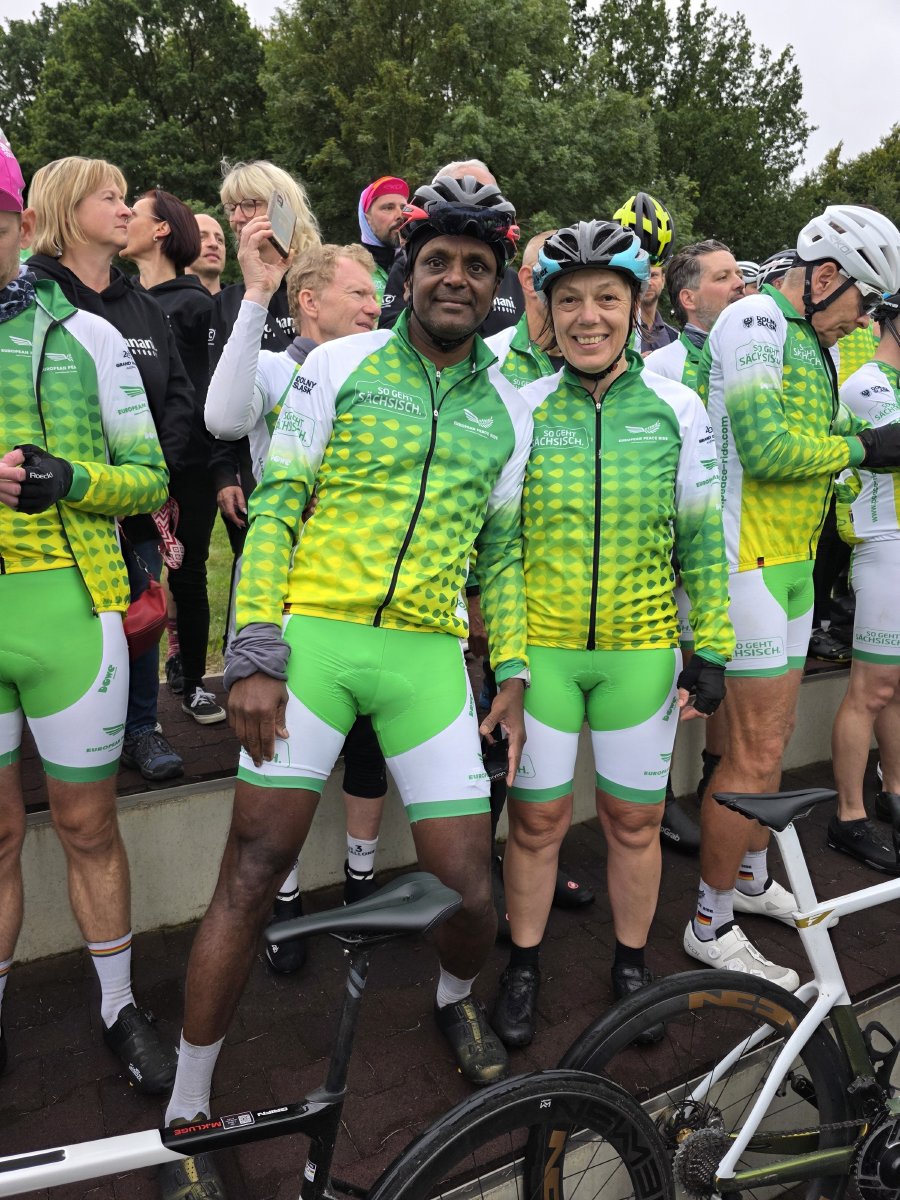
Thank you to the people who made it happen: the organisers, the police who closed roads for us in three countries, the medical crew who were always somehow already there, the cheer teams who kept arriving before we did, and every rider who put a hand on someone’s back on a climb.
Want to ride it? The track, a GPX built for head units and the original FIT are on the route page for Stage 3.
The numbers
| Distance | 174.9 km |
| Elevation | 1,357 m |
| Rolling time | 7h 06m |
| Elapsed | 8h 47m, 08:09 to 16:56 |
| Average speed | 24.6 km/h |
| Steile Wand | 248 m of cobbles, ~12% average, 19% at the steepest; 1m 50s, 6.6 km/h minimum |
| Temperature | 11 to 17 °C, rain most of the day |
| Average heart rate | 134 bpm |
| Three-day total | 453.6 km, roughly 5,000 m of climbing |